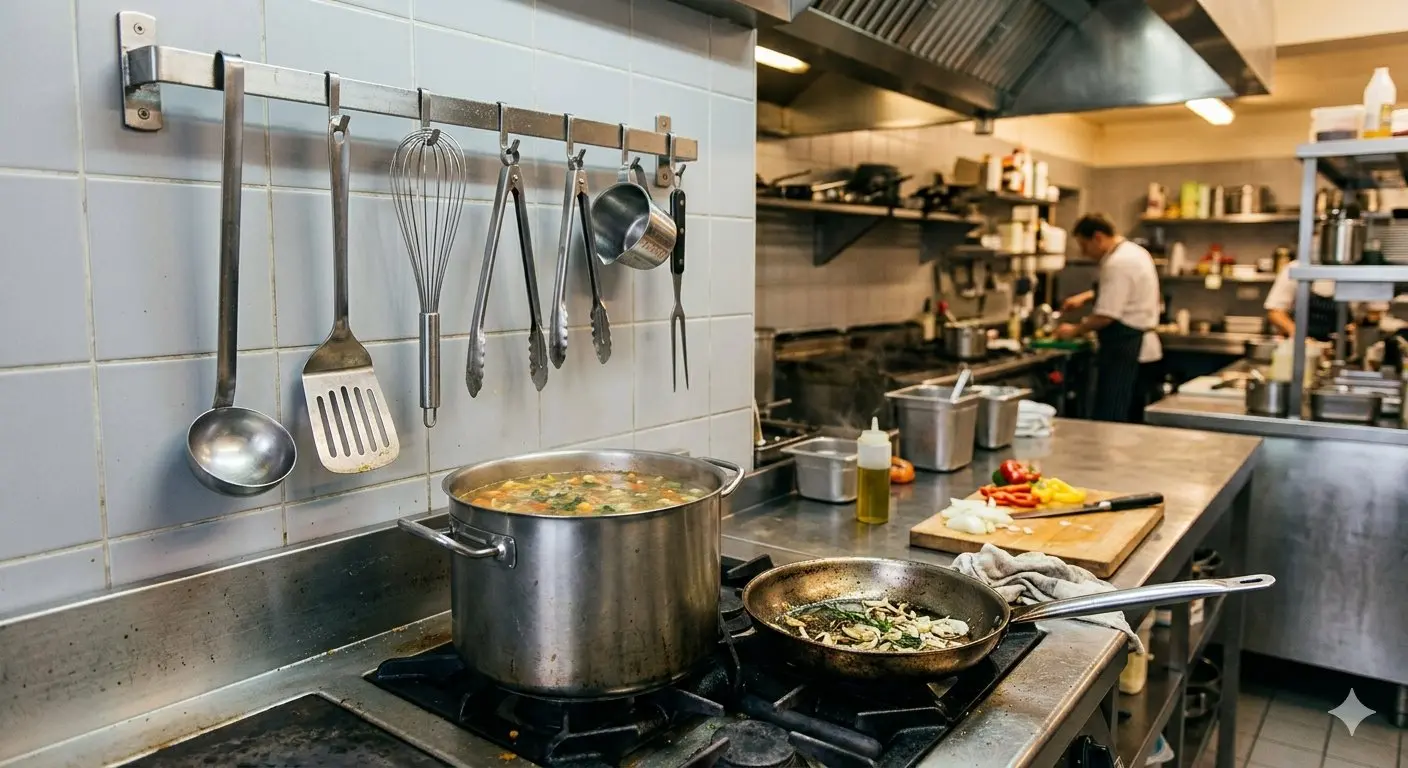
Best Food Distributors for Ghost Kitchens and Virtual Restaurants (2026)
Ghost kitchen distribution is delivery-optimized and data-driven. The concepts that win in ghost kitchens run tight food costs on focused menus — and the right distributor is the one who can price your top 20 SKUs most competitively with reliable fill rates to keep the kitchen running without disruption.
Ghost kitchens and virtual restaurant concepts operate on thin margins in a high-competition environment. Distribution excellence — the right products at the right price with reliable supply — is a direct competitive advantage in a segment where menu pricing pressure is intense and customer acquisition costs are high.
Best Distributors for Ghost Kitchens
Sysco or US Foods
Ghost kitchen operators running multiple virtual brands from a single facility benefit from the breadth of a national broadline — one vendor, one delivery, one account relationship covering the ingredient needs of multiple concepts simultaneously.
US Foods MOXe
Ghost kitchen operators who obsess over per-item food cost (as they should) will find US Foods MOXe's menu costing and ordering analytics tools particularly useful — tracking cost per dish across multiple virtual brands from a single interface.
Restaurant Depot
An essential backup for ghost kitchen operators — emergency sourcing, testing new menu items before committing to broadline ordering, and fill-in for out-of-stock items that would otherwise take a menu item offline for a delivery shift.
Ghost Kitchen Facility Distributors
Some ghost kitchen facilities (CloudKitchens, Kitchen United, etc.) negotiate shared distributor agreements for all tenant operators. If your facility has this, evaluate whether the shared pricing beats what you can negotiate independently.
Food Cost Discipline Is Non-Negotiable in Ghost Kitchens
Ghost kitchen concepts face a brutal economic reality: delivery platform commissions of 15–30%, high customer acquisition costs, and intense price competition from hundreds of other delivery-only options. The only controllable lever that directly affects profitability in this environment is food cost — and that means distribution pricing matters more per percentage point in ghost kitchens than in most other formats.
Target 25–30% food cost for ghost kitchen concepts. Anything above 30% is usually unsustainable at delivery platform commission rates unless your average order value is high enough to generate sufficient absolute margin per order.
Packaging Is a Distribution Cost Item
Ghost kitchen and delivery concepts spend significantly more on packaging than dine-in restaurants — virtually every item served requires takeout containers, lids, bags, and condiment packets. Packaging cost should be tracked as part of your food cost calculation and sourced competitively from your broadline distributor's paper/packaging catalog or from specialty packaging suppliers.
What to Ask Every Distributor
- Can you provide pricing and availability for all items across multiple concepts in a single order?
- What is your fill rate on your top 50 most ordered items by ghost kitchen operators?
- Do you have delivery-optimized packaging (leak-proof containers, heat-retention packaging)?
- What's your pricing on high-volume delivery items — chicken tenders, wings, fries, burgers?
- Do you integrate with any ghost kitchen management platforms for ordering automation?
If you run multiple virtual brands from one kitchen, track food cost separately for each concept. A concept running 35% food cost is subsidizing one running 22% in ways that obscure each concept's true profitability. Concept-level cost tracking is the only way to know which virtual brands to scale and which to retire.
Compare Distributor Prices on Your Ghost Kitchens Ingredients
Upload your distributor price sheets. FrillPick tracks ingredient costs across all your ghost kitchen concepts so you can optimize food cost for every virtual brand.
Compare My Prices Free21-day free trial · Upload any distributor CSV or Excel
Frequently Asked Questions
What food cost percentage should a ghost kitchen target?
Ghost kitchen and virtual restaurant concepts should target 24–30% food cost — tighter than most dine-in concepts — because delivery platform commissions (15–30%) significantly compress the margin available for other costs. Higher food cost leaves insufficient margin to cover commissions, packaging, labor, and rent profitably.
Do ghost kitchens get better distributor pricing?
Ghost kitchen facilities that house multiple operators sometimes negotiate shared distributor pricing on behalf of all tenants — which can provide pricing leverage that individual operators couldn't achieve alone. Evaluate whether your facility has such an arrangement before negotiating independently.
How do ghost kitchens handle packaging costs?
Packaging is a significant cost category for delivery-only concepts — typically 3–6% of revenue, compared to 1–2% for dine-in restaurants. Packaging should be sourced competitively from your distributor's paper goods catalog and from specialty packaging suppliers, and tracked as part of your blended food and supply cost.
What virtual restaurant concepts have the best food cost profiles?
Delivery concepts built around chicken (tenders, wings, sandwiches) and smash burgers typically have favorable food cost profiles — high demand, manageable ingredient cost, and efficient prep. Delivery pizza can work well with strong volume. Concepts with high seafood or specialty produce costs struggle to hit target food cost at delivery platform commission rates.
Sources: FrillPick editorial research; National Restaurant Association virtual restaurant data; delivery platform commission research. FrillPick is not affiliated with or endorsed by any food distributor.